Why Gates Wear Differently from Doors and Windows

Aluminium has a reputation for needing no care, but a gate works harder than most doors or windows. It opens and closes every day, and its full weight hangs on a few hinges or runs on a few rollers. It also sits in a corridor or entrance where humidity, rain splash and washing runoff reach it.
That is why a squeak, a drag or a stain beside a screw rarely appears overnight. These problems build slowly, and early attention keeps them cheap to fix. This guide to aluminium gate maintenance in Singapore explains what you can fix at home and where it stops.
Does an Aluminium Gate Actually Rust?
Not in the strict sense. Rust is the corrosion of iron and steel, and aluminium is not an iron-based metal. A gate can still show corrosion or staining, so the useful question is where the problem comes from.
Aluminium Oxidation vs Rust: How to Tell Them Apart
Aluminium forms a thin oxide layer on its surface, and this layer is why it resists corrosion, as the Royal Society of Chemistry explains. When that layer is attacked, the result is typically a dull, chalky white or grey film, sometimes with small pits. Rust on steel looks different: orange-brown, flaking and often streaking.
The difference matters because the fix differs. A chalky film on the frame points to the coating or the environment. Orange-brown streaks usually point to a steel part somewhere nearby.
Where Rust on an "Aluminium" Gate Usually Comes From
The likeliest sources are components that are not aluminium: screws and fasteners, hinges, latches, locks and bolts. Rust from these parts can run down and stain the frame, which makes the frame look like the culprit.
Contact between different metals can also cause trouble. The Australian Stainless Steel Development Association notes that a stainless screw in aluminium is frequently used, though corrosion of the aluminium right around it is possible. Materials vary by gate, so identify what yours actually uses before deciding what to do.
The Role of the Powder-Coated Finish
Many aluminium gates have a powder-coated finish, a baked-on layer that protects the metal and provides colour. Some use other finishes, so check what yours has. A chip or deep scratch exposes the metal beneath, so small damage matters more than it looks.
Know Your Gate Before You Maintain It
Maintenance steps depend on the gate type. Before you start, identify the frame, hinges or tracks, rollers, guides, locks and infill panels. SG Aluminium's gate range includes swing gates and sliding gates, which shows why type matters: the two styles wear in different places, so the type decides which parts need attention.

Swing Gates: Hinges, Latches and Load
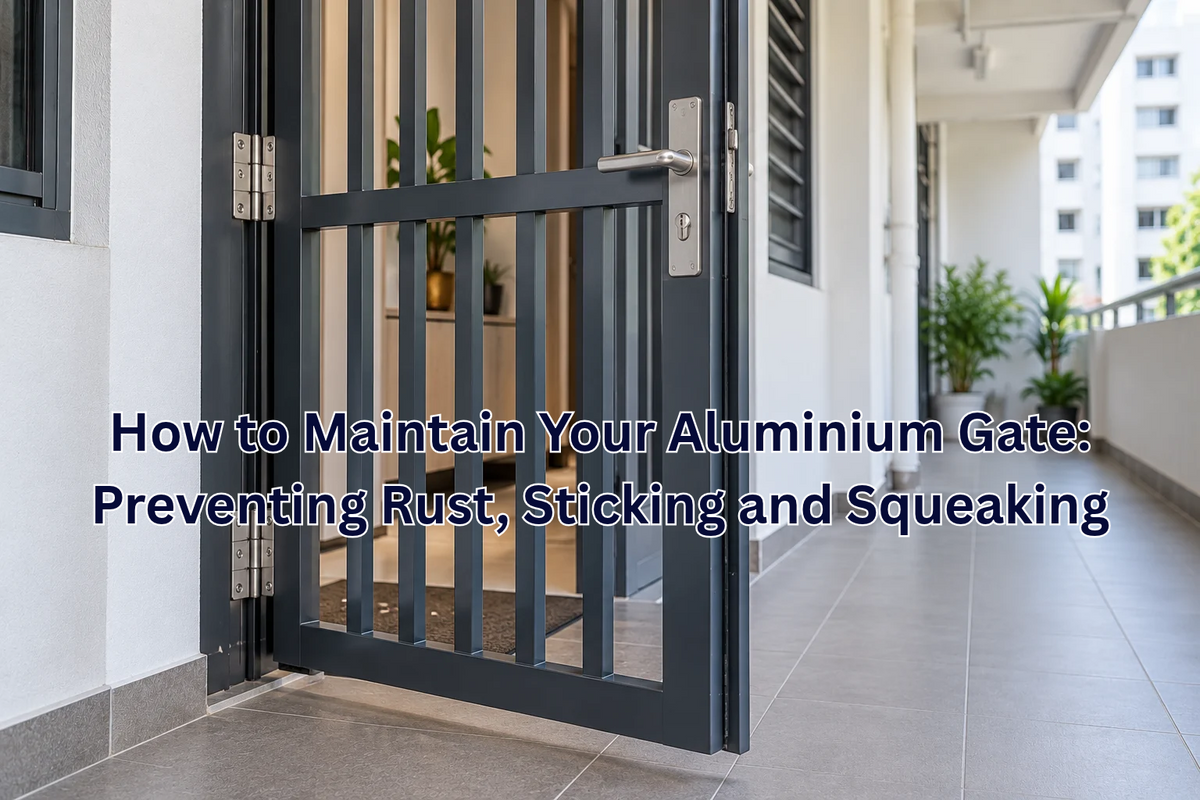
A swing gate carries its weight on the hinges and closes onto a latch. Worn hinges let the gate sag, causing it to scrape the ground or miss the latch. Loose fixings let the gate move in its frame, and a dirty or misaligned latch stops it from closing securely.
Sliding Gates: Tracks, Rollers and Guides
A sliding gate rides on rollers along a track. Grit and leaf litter collect in the track, and worn rollers stop turning smoothly. Most sticking complaints on this type trace back to the track or rollers, and a sliding gate that jams can also come off its guides.
A Simple Routine for Keeping Your Gate in Good Condition
A routine you can keep up beats an ambitious one you abandon. Think in terms of what to do and why, not a rigid calendar.
Cleaning the Gate Without Damaging the Finish
Wash with mild detergent in water, use a soft cloth or sponge, rinse and dry. Avoid abrasive pads, bleach and strong solvents. General cleaning steps are covered in the guide to cleaning aluminium doors, so this guide does not repeat them. Check your finish supplier's recommendations if you have them.
Inspecting Hinges, Fixings and Moving Parts
Look over the gate periodically. Check for loose screws, early corrosion on fasteners, worn hinges or rollers, and any sign that the gate is starting to sag or drag. Watch how it moves as well as how it looks: a new rub mark, an uneven gap or a stiff spot is an early warning.
Looking After Locks, Latches and Any Fitted Digital Lock
Keep latches clean and check that they still line up. Follow your manufacturer's guidance for electronic and digital locks, and lubricants meant for hinges may not suit them. Do not spray or oil electronic parts.
Preventing Rust and Corrosion Before It Starts
Prevention starts where problems begin: hardware, coating damage, and exposure.
Protecting Hardware and Fasteners
Exposed hardware is where corrosion usually starts, so inspect it more often than the frame. If screws or parts need replacing, ask your supplier for parts that match the original specification. Mixing metals carelessly can cause corrosion where they touch, as noted above.
Dealing with Chips, Scratches and Early Spots
Deal with small coating damage early, because exposed metal is where trouble begins. Keep the area clean and dry, and note whether it is spreading. For anything beyond a tiny mark, ask your supplier about finish repair. A mismatched touch-up can look worse than the chip.
Everyday Exposure in HDB Corridors and Condo Entrances
Several everyday factors affect a gate in Singapore's humid, rainy climate: rain splash, standing water at the base, and runoff from corridor washing. None is guaranteed to cause problems. Look at the bottom of the frame and the track area, where water and dirt gather.
How to Fix a Squeaking Gate
A squeak is a signal, so find the cause before applying anything.
What Usually Causes the Squeak
Common causes are dry or dirty hinges, worn bushings, loose fixings and metal rubbing on metal. A squeak that appears only at one point in the swing usually points to one hinge. A squeak that comes with sagging or dragging suggests wear, not just dryness.
Choosing and Applying a Lubricant Properly
Use a lubricant suited to hinges and moving parts, and follow the hardware maker's instructions. Oily products can attract dust and grime, which can build into a gritty residue.
-
Clean the hinge first so you don't seal grit inside.
-
Apply sparingly. Excess drips and stains.
-
Wipe off any lubricant from the coated finish right away.
-
Move the gate a few times to spread it, then wipe again.
If the squeak returns quickly, wear is probably the cause, and lubricant won't fix it.
How to Fix a Sticking or Dragging Gate
You can usually find the cause by looking at where and when the gate catches.
Working Out Why It Sticks
|
What you notice |
Likely cause |
Safe first step |
|
Swing gate scrapes the ground |
Sagging on the hinge side |
Check accessible fixings for looseness; call a professional if the sag persists |
|
Swing gate misses the latch |
Sag or misalignment |
Clean the latch and look for sag before touching anything else |
|
Sliding gate judders or stops part-way |
Debris in the track or worn rollers |
Clean the track; do not force the panel |
|
Gate drags at one point only |
Frame or floor movement |
Note where it drags and get it checked |
What You Can Safely Adjust Yourself
Safe steps are limited to cleaning tracks, gently tightening accessible fixings, and making simple alignment checks. Do not over-tighten, and stop if a fixing spins or the material gives way.
Be clear about the limits. Sliding panels are heavy and can derail. Dismantling hinges, rollers, or frames isn't a homeowner task.
Why a Fix Shouldn't Change Your Gate's Swing, Width or Clearance
Repairs that alter swing direction, width or panel arrangement can create compliance problems for HDB units. Replacement parts should keep the gate's original width, panel arrangement and swing direction. The separate guide to HDB gate rules covers clearance and swing, and you should confirm requirements against HDB's renovation guidelines before changing anything.
When to Stop and Call a Professional
Stop and get help if you see:
-
A bent or cracked frame
-
Failed welds or joints
-
Loose anchoring to the wall or frame
-
Damaged infill panels
-
Severe sagging that adjustments do not resolve
-
Any fault where the gate could fall or fail to close securely
These faults involve safety and security, and home fixes can make them worse. Check your warranty terms first, since the supplier may need to do some repairs.
Common Gate Maintenance Mistakes

-
Cleaning with abrasive pads or harsh chemicals, which damages the finish
-
Using the wrong lubricant, or too much
-
Over-tightening fixings until threads strip
-
Ignoring small coating damage
-
Treating a recurring fault as a one-off fix, when it signals wear
Conclusion
Aluminium itself resists rust, but a gate's hardware and coating need attention. Regular inspection catches most problems early, and a gentle clean keeps the finish intact. Squeaking and sticking have identifiable causes, and some have safe first steps. Others, such as a bent frame, loose anchoring, or a gate that may not close securely, call for a professional. Any repair should leave the gate's swing, width, and clearance unchanged.