Choosing a kitchen door in Singapore usually comes down to one constraint before any style preference: how much clearance space you actually have. A kitchen door separates the wet, high-heat cooking area from the rest of the home, which matters more in Singapore than in many other markets, since most local kitchens are used for daily wok cooking that produces significant heat, smoke, and odour. Aluminium has become the standard material for this application because it resists moisture, corrosion, and the daily wear of a working kitchen far better than timber, without the upkeep timber requires in Singapore's humidity.
This guide compares the five main aluminium kitchen door types by space requirement and best-fit scenario, so you can narrow down the right type before requesting a quote.
Kitchen Door Types Compared
|
Door Type |
Space Required |
Mechanism |
Best For |
|
Swing |
Full door-width clearance on both sides |
Hinged, swings open on one side |
Kitchens with ample clearance space, frequent quick in-and-out access |
|
Bi-fold |
Roughly half the opening width when folded |
Two panels fold against each other |
Medium-width openings where a full swing isn't practical |
|
Sliding |
Minimal, door slides along the wall |
Glides on a track parallel to the wall |
Compact kitchens, especially trackless designs that conceal fully |
|
Slide and swing |
Similar to sliding when open, swing clearance when used as a swing |
Combines both mechanisms in one door |
Kitchens wanting swing-door security with sliding-door space savings |
|
Folding |
Similar to bi-fold, scales with panel count |
Multiple panels concertina together |
Wider openings where a single bi-fold pair isn't enough coverage |
1. Swing Doors: The Straightforward Choice
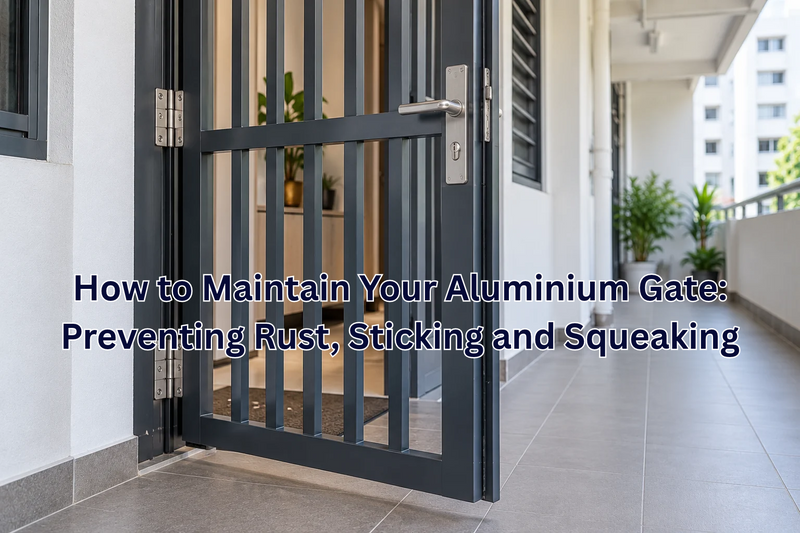
A swing door is the simplest mechanism, hinged on one side with no bottom track to obstruct the floor. This makes it the easiest to open quickly with your hands full, which matters more than it sounds during actual cooking. The tradeoff is that it needs genuine clearance space to swing through, which rules it out for tighter kitchen layouts common in smaller HDB units.

2. Bi-fold Doors: The Space-Saving Standard
A bi-fold door folds in two panels against each other rather than swinging through open space, which roughly halves the clearance needed compared to a swing door. SG Aluminium's standard bi-fold configuration runs 3ft by 7ft, with a choice of hanging or bottom-track mechanisms and a lattice panel design. This is generally the most budget-friendly option among the five, and its lighter construction makes it a common default choice for standard kitchen openings.
Check How to Choose Perfect Bi-Fold Doors for Your Home – SG-Aluminium

3. Sliding Doors: Maximum Space Efficiency
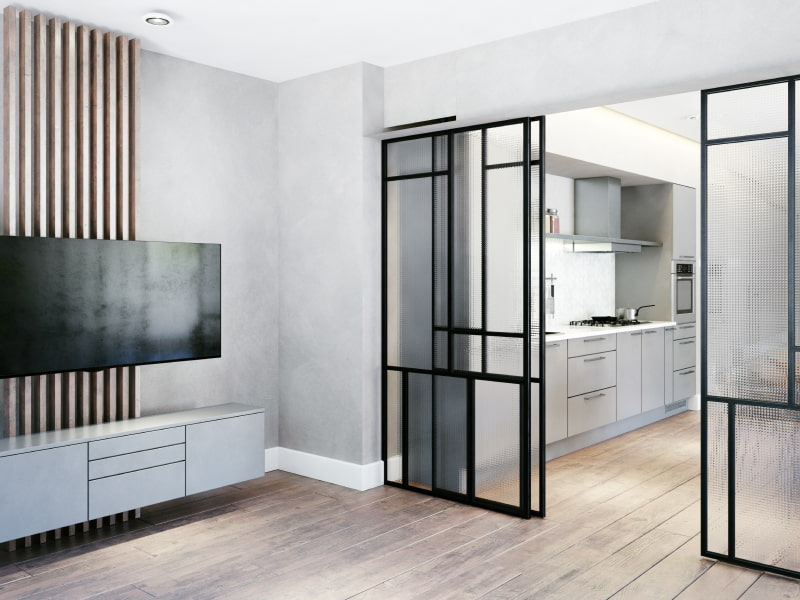
A sliding door moves along a track parallel to the wall rather than swinging or folding into the room, which makes it the strongest choice where floor space is genuinely tight. Trackless variants exist that eliminate the floor rail entirely, useful where a raised track would be a trip hazard or interfere with flooring continuity between the kitchen and living area.

4. Slide and Swing Doors: Combining Both Mechanisms
This design offers a swing door's full seal and security when closed, with a sliding mechanism that lets it tuck away with less clearance than a full swing when open. It suits households who want the option of fully sealing off the kitchen (useful during heavy wok cooking to contain smoke and odour) without sacrificing all the space efficiency of a sliding design.

5. Folding Doors: Coverage for Wider Openings
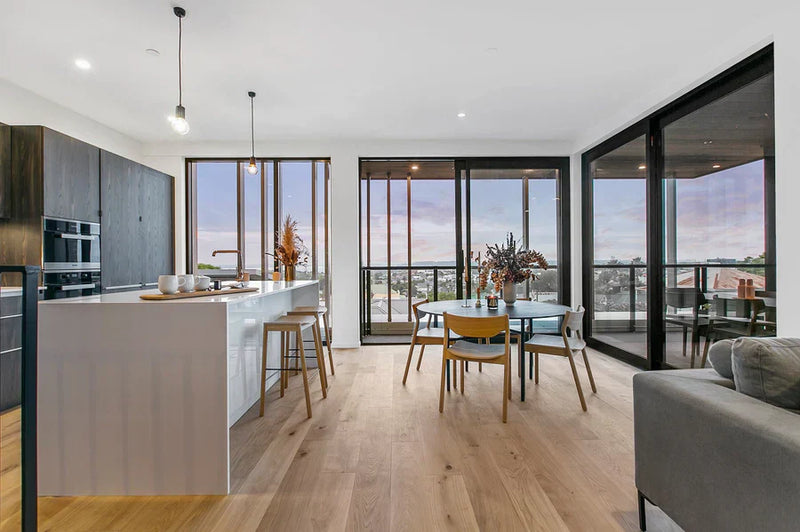
Where a kitchen opening is too wide for a standard two-panel bi-fold to cover comfortably, a multi-panel folding door concertinas across the full width in smaller increments. This suits open-concept layouts where the kitchen entrance spans a wider section than a typical doorway, common in some condominium layouts.

Choosing Based on Your Kitchen Layout
Start with clearance, not style. If you have a compact kitchen entrance in an HDB unit, sliding or bi-fold will almost always fit better than a swing door. If odour and smoke containment during cooking is a priority, since Singapore's wet kitchens often see intensive daily use, a slide-and-swing or a fully sealing swing door gives the most complete barrier when closed. If your kitchen opening is unusually wide, folding doors scale better than a standard bi-fold pair.
Material durability matters regardless of which mechanism you choose. Aluminium's resistance to moisture and corrosion makes it well suited to Singapore's humidity and the daily condensation, steam, and grease exposure a kitchen door faces, in contrast to timber doors, which are more prone to warping and require more frequent maintenance in this climate.
Getting a Quote for Your Kitchen
Exact pricing depends on the door type, dimensions, and finish you choose, and is best confirmed directly against your specific opening rather than estimated from a general range. SG Aluminium provides factory-direct quotes for all five door types covered here, along with installation.
FAQ
Which aluminium kitchen door is best for a small HDB kitchen?
Sliding or bi-fold doors generally work best in tight spaces, since both require far less clearance than a swing door to open fully.
Why is aluminium preferred over timber for kitchen doors in Singapore?
Aluminium resists moisture, corrosion, and daily steam and grease exposure better than timber, which is more prone to warping in Singapore's humidity.
What's the difference between a bi-fold and a folding kitchen door?
Both fold rather than swing or slide, but a bi-fold uses two panels, while a folding door uses multiple panels, making it better suited to wider kitchen openings.